
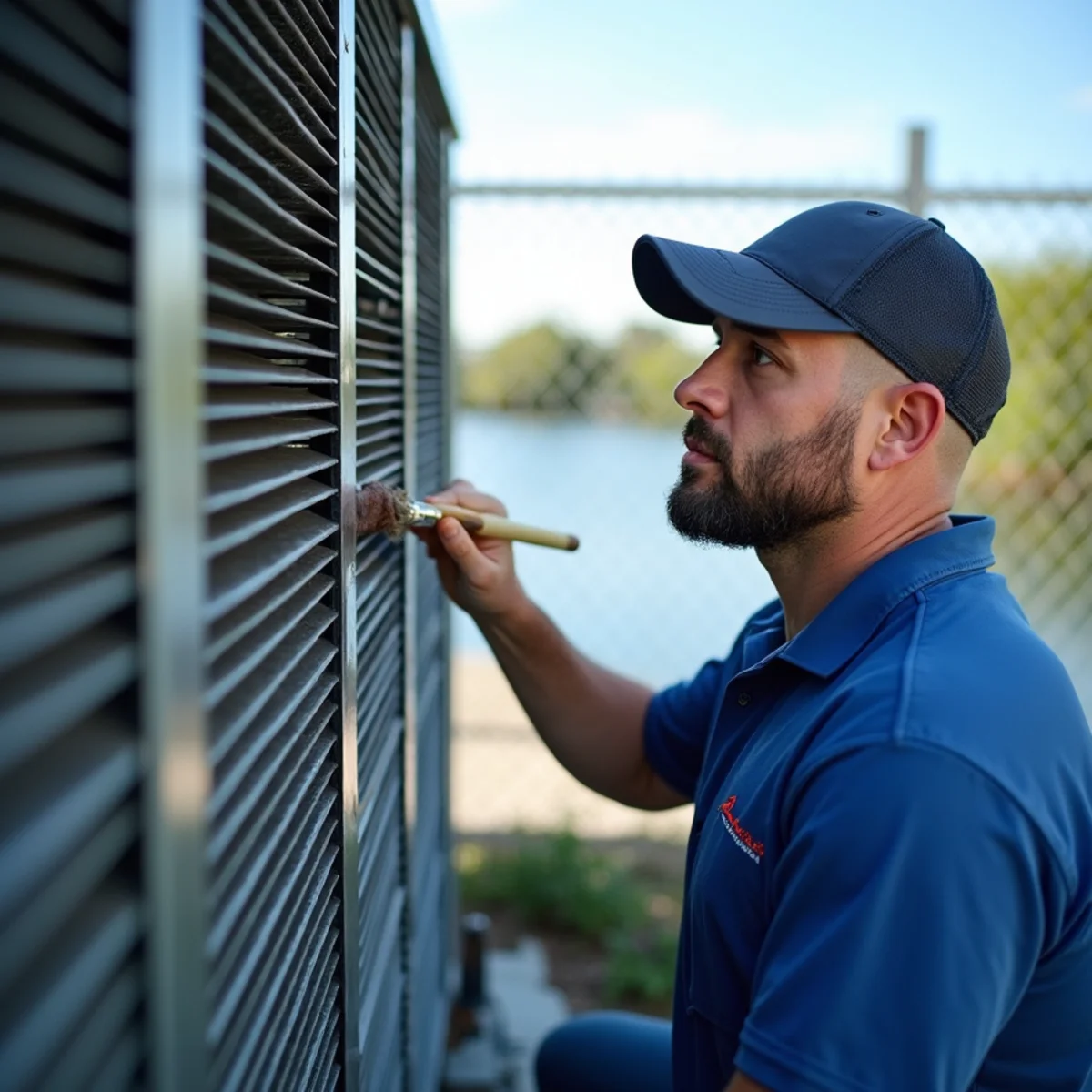
The good news: corrosion is a physics problem, and physics has countermeasures. Coil coatings, freshwater rinse habits, whole-system surge protection, and code-compliant elevation are all inexpensive relative to the equipment they protect. Our coastal protection service audits your property's exposure — salt, surge, wind, drainage — and installs the defenses that match, so your system spends its lifespan cooling instead of dissolving.
Your system is losing the salt war if…
- Outdoor coil fins are dark, crumbling, or flaking at the edges
- Cooling capacity has dropped noticeably in the last two seasons
- Cabinet fasteners are rusted or missing entirely
- White or green corrosion coats electrical connections
- The unit sits in a yard that gets direct bay or ocean breeze
- Power flickers with every summer thunderstorm
- The condenser sits at grade in a flood- or surge-prone block
- The system is 5+ years old and has never been coated or rinsed
What affects your price
These factors shape your final price. Published local benchmark ranges appear in the page copy where they're relevant — and you'll get every charge in writing before work begins.
- Coil coating scope: field-applied vs. factory-coated replacement
- Surge device type and grounding corrections needed
- Elevation stand height, engineering, and permitting
- Rinse-program enrollment and frequency
- Existing coil condition and restoration needs
- Multi-system properties (condo racks, dual units)
What's included with Coastal AC Protection in Stuart
Every Coastal AC Protection job is scoped and documented up front — here's what you get when we roll up to your Treasure Coast home or business.
- Coastal exposure audit: salt, surge, wind, and drainage
- Coil condition assessment with fin and tubing inspection
- Field-applied protective coating or factory-coated equipment spec
- Whole-system surge protective device installation
- Grounding and disconnect verification
- Elevated pad or stand installation where flood zones require
- Rinse-program coaching and maintenance-plan reminders
Defense one: coil coatings that stop corrosion at the surface
The most effective protection is applied before corrosion starts: a factory or field-applied epoxy/silicone coil coating that seals the aluminum fins and copper tubing against salt deposition. Factory-coated coastal equipment is our first recommendation for new installs near the water; for systems already in place, field-applied coatings buy meaningful years when the coil is still sound.
Coatings aren't magic on a coil that's already crumbling — they preserve, they don't resurrect. That's why the audit starts with the coil's actual condition: if it's salvageable, coat it; if it's past saving, the coating conversation moves to the replacement unit. Either way, the goal is the same: the next decade of salt air hits a barrier, not bare metal.
Defense two: freshwater rinses — the free habit that works
Salt does its damage by depositing and concentrating; freshwater rinses wash it away before it etches. A monthly or biweekly garden-hose rinse of the outdoor coil — power off, gentle spray, top-down — flushes the deposits that would otherwise spend the whole summer eating your system. Waterfront homes in Sewall's Point, Sailfish Point, and along the river benefit most; even a mile inland, a rinse routine outperforms neglect.
We coach every coastal customer on the safe technique (power off at the disconnect, no pressure washers, mind the fins) and build rinse reminders into maintenance plans. It's a five-minute chore that extends equipment life more per dollar than anything else on this page.
Defense three: surge protection for lightning country
Florida is the lightning capital of the United States, and the Treasure Coast sits squarely in the red zone. Every summer thunderstorm is a chance for a nearby strike or grid flicker, and the hours after an outage are the deadliest — restoration surges kill control boards and compressors in systems that survived the storm itself. A whole-system surge protective device installed at the equipment clamps those spikes before they reach the expensive parts.
The economics are lopsided in your favor: a modest one-time install versus a compressor or control board replacement costing thousands. We pair the device with verification of your grounding and disconnect condition, because a surge protector on a bad ground is a talisman, not a defense.
Defense four: elevation and placement for surge zones
In flood zones and surge-prone blocks — the barrier island, Rocky Point, South River, low riverfront yards — Florida code requires outdoor units elevated above expected flood levels. Engineered stands do more than satisfy the inspector: they keep the electrical compartment out of the water that ruins compressors, and they lift the coil above the grass spray and debris line.
Placement matters too: a unit shielded from direct salt breeze and falling debris lives longer than one in the open. When we audit a property we look at the whole picture — elevation, wind direction, drainage, vegetation — and recommend the changes that cost least and protect most.

Our Coastal AC Protection process
Test first, document everything, and get your sign-off before the work happens — no guesswork, no surprises.
- 1
Audit the exposure
We map your property's salt path, flood zone, wind exposure, and electrical protection — the risks before the remedies.
- 2
Assess the equipment
Coil condition, fastener corrosion, and electrical compartment inspection decide what's protectable.
- 3
Install the defenses
Coating, surge protection, elevation, and placement fixes — sized to your actual exposure, not a package deal.
- 4
Verify everything
Coating coverage, surge device function, ground integrity, and strapping torque — tested, not assumed.
- 5
Keep the habit
Rinse coaching, maintenance scheduling, and annual re-inspection keep the protection working for a decade.
Why Stuart homeowners choose HVAC Stuart FL for Coastal AC Protection
15+ years on the Treasure Coast, 4.9★ across 187+ reviews, and a licensed, insured, EPA-608–certified crew that treats your home like a neighbor's.
- Local corrosion experience from the river to the barrier island
- The full defense stack — coating, rinses, surge, elevation — under one contractor
- Honest assessment: protect what's salvageable, replace what isn't
- Code-compliant elevation work with permitting handled
- Maintenance plans that make the protection a habit, not a one-time event
Where we provide Coastal AC Protection
We protect coastal AC systems in Sewall's Point, Jupiter Island, Hutchinson Island, Sailfish Point, riverfront Stuart, and throughout Martin County. We handle Coastal AC Protection across all of Martin County — from our shop at 3077 SE Dixie Hwy, Stuart, FL 34997. That includes Martin County, Sewall's Point, Ocean Breeze, Rio, Jensen Beach, Palm City, North River Shores and Port Salerno, plus Treasure Coast neighbors from Fort Pierce to Jupiter. Call (327) 210-5999 and we'll confirm same-day or 24/7 emergency availability for your address.
Ready for Coastal AC Protection in Stuart?
Same-day service across Martin County · 24/7 emergency dispatch
Coastal AC Protection FAQs
Coastal studies and field experience agree: salt exposure corrodes condenser coils and cabinets four to eight times faster than inland conditions. Practically, that's a 6–8 year life for unprotected units near the water versus 12–15 inland. Coatings, rinses, and placement push coastal equipment back toward the long end of that range.
Related Services
Helpful Articles
Local Guides
Salt Air Destroys AC 4-8x Faster: A Stuart Homeowner's Guide
Living near the water costs your condenser years of life — unless you fight back. The corrosion science, the distance zones, and the protection that works.
Costs & Buying
Why Coastal AC Units Die in 6-8 Years — and What Protection Costs
A condenser that would last 15 years inland dies in 6-8 near the water. The corrosion science, the four-layer defense, and the math that makes each layer pay.
Local Guides
Florida Is the Lightning Capital: Protecting Your AC on the Treasure Coast
Florida's lightning density is the nation's highest, and your condenser is the tallest metal in the yard. The protection that actually works — and the hours after the storm that matter most.