
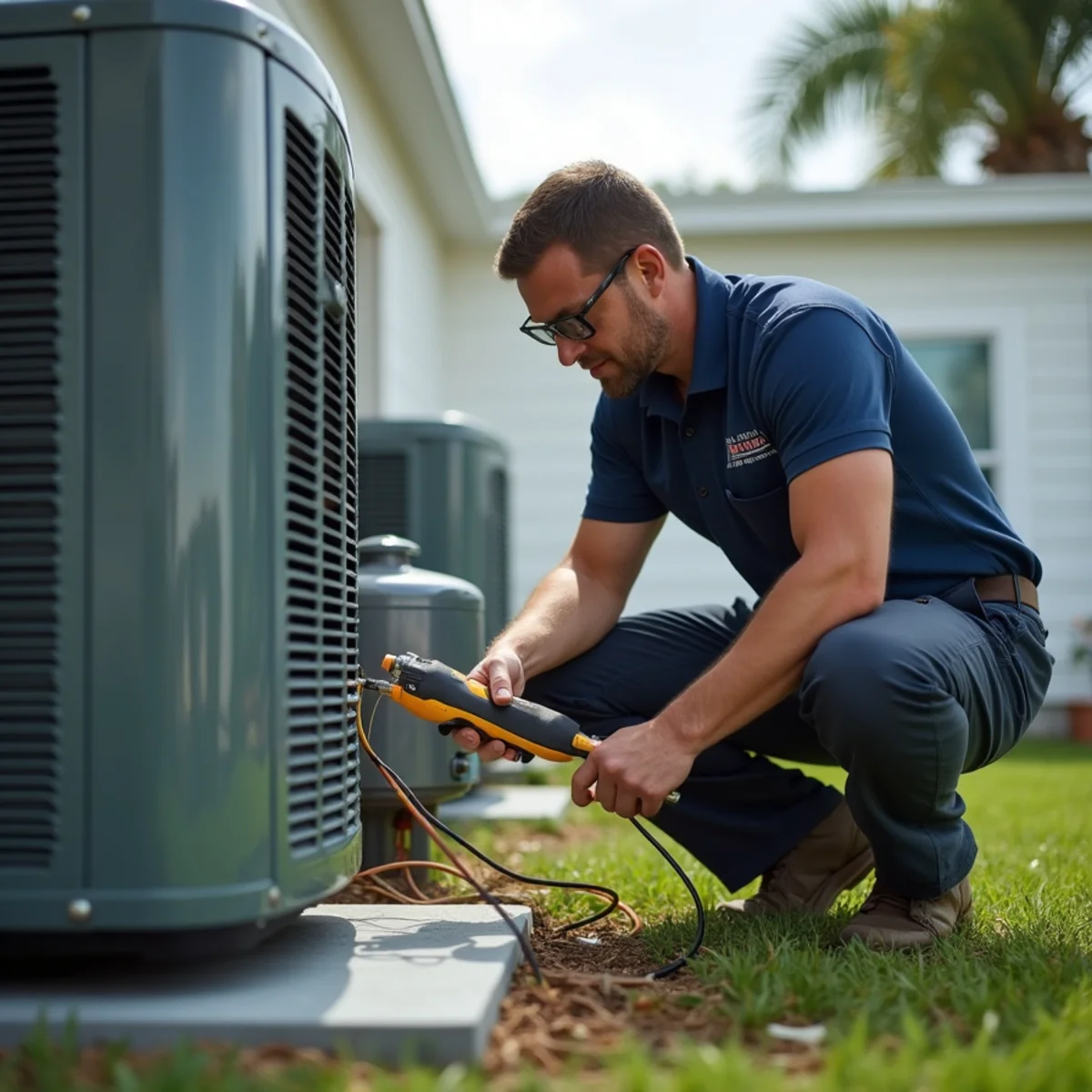
Our approach separates the three decisions people confuse: finding the leak, repairing the leak, and recharging the system. Topping off without the first two is renting cold air at several hundred dollars a visit — and in a system near the coast, the leak returns. We use electronic detection, pressure testing, and dye where needed, then give you an honest line-item: leak repair, recharge, and what the system's overall condition says about its remaining life.
Signs of a refrigerant leak
- AC runs constantly but never quite reaches the setpoint
- Vents blow cool-ish air instead of cold
- Ice on the copper line set or indoor coil
- Hissing or bubbling sounds near the coil or line set
- Oily residue at fittings, valves, or coil connections
- Electric bills climbing as the system runs longer
- The system was 'recharged' last year and is low again
- Home stays sticky and humid while running
What affects your price
These factors shape your final price. Published local benchmark ranges appear in the page copy where they're relevant — and you'll get every charge in writing before work begins.
- Leak location and section (fitting, valve, coil, line set)
- Single leak vs. multiple points in corroded coils
- R-410A versus R-22 refrigerant economics
- Coil replacement scope if the leak is structural
- Vacuum, pressure-test, and recharge requirements
- System age and remaining-life context
What's included with Refrigerant Leak Repair in Stuart
Every Refrigerant Leak Repair job is scoped and documented up front — here's what you get when we roll up to your Treasure Coast home or business.
- Charge and performance verification before 'low refrigerant' is assumed
- Electronic detection with nitrogen pressure testing and isolation
- Brazed repairs at fittings, valves, and serviceable sections
- Proper deep vacuum before recharge — no air or moisture left inside
- Recharge to nameplate or subcooling target, verified with measurements
- R-22 vs. replacement economics laid out in writing
- Coastal-corrosion follow-up so the repair outlives the season
How leaks happen in coastal Florida
Salt-laden air settles on outdoor coils and attacks the aluminum fins and copper tubing, and galvanic corrosion accelerates wherever dissimilar metals meet. Indoor coils suffer a different route: formicary corrosion, driven by household VOCs and moisture, produces pinhole leaks that are nearly invisible and maddeningly intermittent. Line sets rubbing against supports, factory flare joints, and schrader valves round out the usual suspects.
Age matters too. Systems in Rio, Golden Gate, Port Salerno, and other established neighborhoods are frequently original or near-original — twenty years of corrosion cycles that leak one summer and strand the compressor the next. The leak you can see is often not the only one; corroded coils fail progressively, which is why our diagnosis includes the whole circuit's condition, not just the hissing spot.
Detection and repair, done properly
Detection starts where it should: verified charge calculations and pressures, an electronic leak detector along the circuit, and visual inspection at every joint. Stubborn leaks get nitrogen pressure testing and isolation — the indoor coil, outdoor coil, and line set are tested separately to pin the leak's section. Dye is a last resort for intermittent gremlins.
Repair depends on what we find. A leaking fitting or valve is a clean braze or replacement. A pinholed coil section can sometimes be isolated; a corroded coil usually deserves replacement of the coil or the system. After repair, we pressure-test, pull a proper vacuum, recharge to the nameplate or subcooling target, and verify performance — the system leaves meeting spec, not just 'colder than it was.'
The R-22 question, honestly
R-22 is effectively legacy refrigerant in 2025: production ended years ago, remaining supplies are expensive, and every pound has to come from reclaimed stock. If your R-22 system has a leak, the math rarely favors 'repair and recharge' unless the leak is trivial and the system otherwise healthy — you're paying a premium for refrigerant that can leak out again through the same corroded coil.
We'll lay out the numbers: leak repair plus R-22 recharge versus a replacement scope with modern R-454B or R-410A equipment. Reported central AC installation near Stuart runs $5,800–$11,200; against repeated R-22 service calls, the replacement often pays for itself in a few years. But if your system is a good candidate for repair, we'll say that too — the goal is your cheapest reliable decade, not our biggest ticket.

Our Refrigerant Leak Repair process
Test first, document everything, and get your sign-off before the work happens — no guesswork, no surprises.
- 1
Verify the symptom
Pressures, saturation temperatures, and temperature split confirm low charge — and reveal whether airflow or metering problems are mimicking it.
- 2
Locate the leak
Electronic detection along the circuit, then nitrogen isolation of coils and line set for the stubborn ones.
- 3
Repair the cause
Braze, valve, or coil work at the actual leak point — with the surrounding corrosion assessed honestly.
- 4
Evacuate and recharge
Deep vacuum to remove moisture and air, then charge to spec and verify against performance targets.
- 5
Protect what's left
Coil rinse, corrosion inspection, and maintenance scheduling so the repaired circuit keeps its charge.
Why Stuart homeowners choose HVAC Stuart FL for Refrigerant Leak Repair
15+ years on the Treasure Coast, 4.9★ across 187+ reviews, and a licensed, insured, EPA-608–certified crew that treats your home like a neighbor's.
- Leak located and repaired — not an annual recharge subscription
- Nitrogen isolation testing that finds the gremlins
- Honest R-22 math: recharge vs. replacement, in writing
- Proper vacuum and charge-to-spec on every repair
- Coastal corrosion follow-up so the fix holds
Where we provide Refrigerant Leak Repair
We find and repair refrigerant leaks across Stuart, Sewall's Point, Hutchinson Island, Port Salerno, Jensen Beach, and greater Martin County. We handle Refrigerant Leak Repair across all of Martin County — from our shop at 3077 SE Dixie Hwy, Stuart, FL 34997. That includes Martin County, Sewall's Point, Ocean Breeze, Rio, Jensen Beach, Palm City, North River Shores and Port Salerno, plus Treasure Coast neighbors from Fort Pierce to Jupiter. Call (327) 210-5999 and we'll confirm same-day or 24/7 emergency availability for your address.
Ready for Refrigerant Leak Repair in Stuart?
Same-day service across Martin County · 24/7 emergency dispatch
Refrigerant Leak Repair FAQs
The classic signs: the system runs constantly without reaching the setpoint, vents feel cool rather than cold, ice forms on the line set or indoor coil, and bills climb. But low airflow from a dirty filter can mimic all of these — proper diagnosis verifies charge with gauges and temperatures before calling anything a leak.
Related Services
Helpful Articles
Problems & Fixes
Refrigerant Leak Signs in Coastal Florida Homes
An AC doesn't consume refrigerant — low charge means a leak, and coastal homes leak more. The signs, the salt-air connection, and the fix that isn't an annual recharge.
Problems & Fixes
AC Blowing Warm Air After a Thunderstorm? Treasure Coast Troubleshooting
Every summer storm leaves a few ACs blowing warm behind it. The troubleshooting sequence — breaker, surge, float switch, charge — in the order that saves money.