
Local Guides · 7 min read
Salt Air Destroys AC 4-8x Faster: A Stuart Homeowner's Guide
By HVAC Stuart FL · Published April 10, 2025 · Updated July 12, 2025
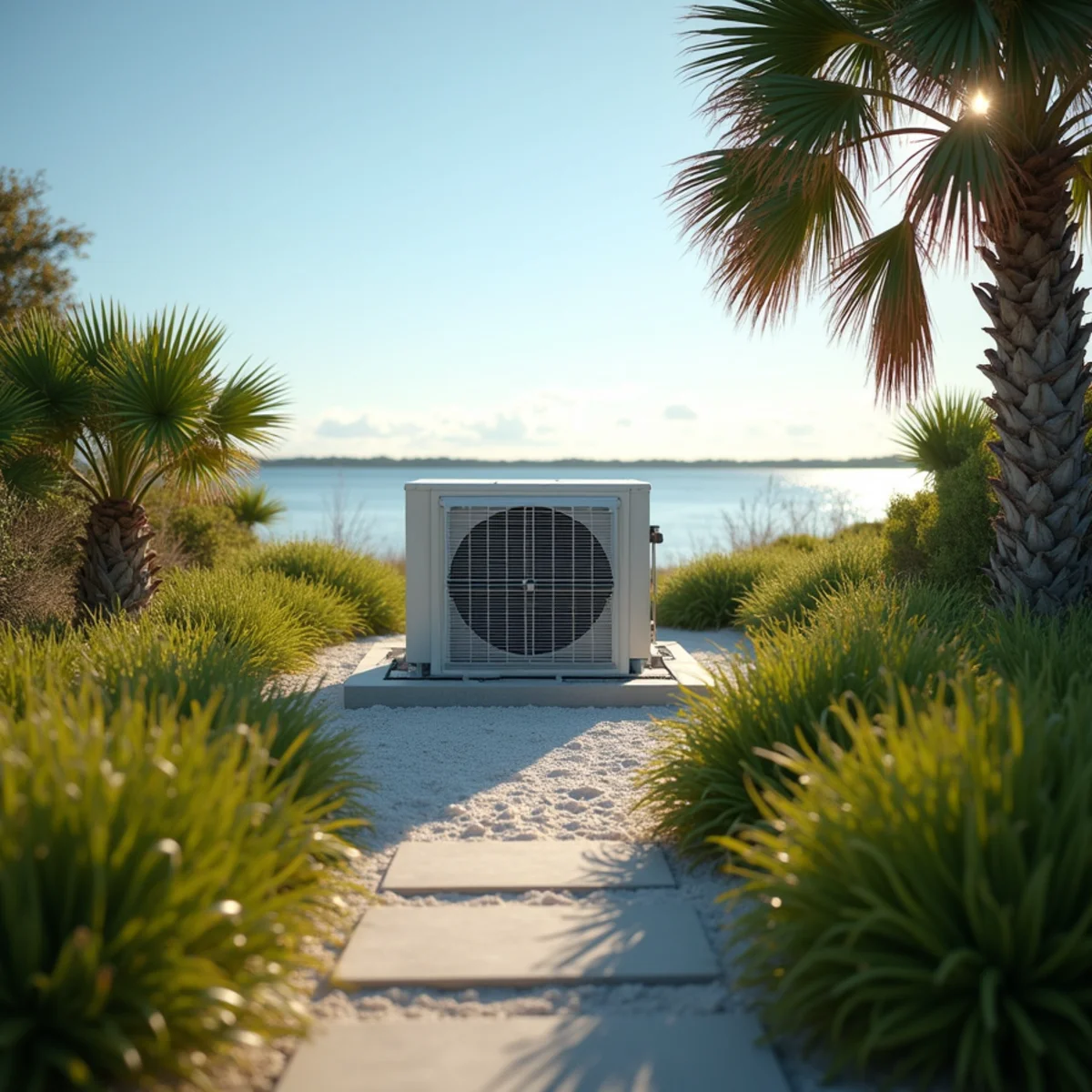
The number every Stuart waterfront homeowner should know: salt air corrodes HVAC equipment four to eight times faster than inland conditions. It's the premium nobody quotes at closing and everyone pays eventually — a condenser that would serve fifteen years in Orlando manages six to eight within the salt path, unless it's protected.
The good news is that protection works, it's affordable, and it's knowable. This guide covers the science, the distance zones, the equipment life you should expect at your address, and the stack that adds the years back.
The science in ninety seconds
Salt air deposits chloride on everything metal outdoors. Chloride breaks down the protective oxide layers on aluminum and copper, accelerates galvanic corrosion wherever dissimilar metals touch (fins on tubes, cabinets on frames), and concentrates through humidity cycling — wet, dry, wet — which coastal Florida runs relentlessly. Outdoor coils, cabinet fasteners, and electrical connections take the worst of it.
The system's death spiral follows: corroding coils lose surface and capacity, longer runtimes compensate, extended runtimes wear electrical components, and the compressor eventually works itself to death against a coil that can't reject heat. The visible markers — dulled fins, the dark salt line, flaking edges — are the timeline's mileposts.
The distance zones
Zone one: within sight of open water — riverfront, lagoon-front, oceanfront, inlet — maximum exposure, unprotected equipment life five to eight years. Zone two: within roughly a mile, the salt breeze still finds you on prevailing-wind days; expect six to ten years unprotected. Zone three: inland Martin County, two to five miles from open water, exposure moderates toward ten to twelve years — still shorter than Orlando's, because the county is small and salty.
Your address sits in a zone, and the protection decision follows from it: zone one and two get coastal-rated equipment as specification; zone three gets it as a recommendation. The rinse habit applies everywhere in all three zones.
The protection stack
Layer one is the equipment: factory epoxy-coated coils and corrosion-resistant cabinets — the defense that works before corrosion starts, and the reason coastal-rated is the only specification we quote in zones one and two. Field-applied coatings serve systems already installed with sound coils. Layer two is the habit: monthly freshwater rinses (power off, gentle spray) that flush deposition before it etches — free, and measurably effective.
Layer three is electrical: whole-system surge protection, because salted connections fail faster under every summer's voltage events. Layer four is the keystone: a maintenance plan with fixed-interval corrosion inspection, drain treatment, and electrical testing — the record-keeping that catches the salt line's progress before it becomes capacity loss. Each layer is cheap; the stack is the difference between the short timeline and the long one.
- Coastal-rated equipment: coated coils, resistant cabinets
- Field coatings for sound existing coils
- Monthly freshwater rinses: free, coachable
- Whole-system surge protection
- Maintenance plan with corrosion inspection
What it all costs, versus what it saves
The stack's annual cost runs a few hundred dollars — maintenance plan plus rinse water, with the coating premium and surge device as one-time or occasional items. A premature coastal replacement runs $5,800–$11,200 reported, plus the emergency timing premium it usually arrives with. Spread across the years the stack adds, it's the cheapest equipment life extension available in coastal Florida.
The honest corollary: none of it rescues a coil that's already crumbling. The assessment precedes the spending — protect what's salvageable, replace what isn't, and start the stack on the replacement from day one. That's how waterfront equipment reaches the long end of its range, and how the neighbors notice.
Frequently Asked Questions
Four to eight times faster than inland conditions, depending on distance to open water. Practically: 5–8 years unprotected within the salt path versus 12–15 inland. With the full protection stack, coastal equipment reaches the long end of the range.
Services Mentioned
Areas We Serve
Related Reading
Problems & Fixes
Corroded Condenser Coils: Stuart's Salt-Air Problem Explained
Fins dull, darken, flake, and then your capacity goes with them. The stages of salt-air coil corrosion in Stuart — and the point where a coil is past saving.
Costs & Buying
Why Coastal AC Units Die in 6-8 Years — and What Protection Costs
A condenser that would last 15 years inland dies in 6-8 near the water. The corrosion science, the four-layer defense, and the math that makes each layer pay.
Seasonal Care
Monthly Freshwater Coil Rinses: The Stuart Salt-Air Maintenance Habit
Five minutes and a garden hose: the rinse habit that flushes salt before it etches, and the closest thing coastal HVAC has to a free lunch. The technique, done right.