
Costs & Buying · 7 min read
Why Coastal AC Units Die in 6-8 Years — and What Protection Costs
By HVAC Stuart FL · Published May 1, 2025 · Updated July 20, 2025
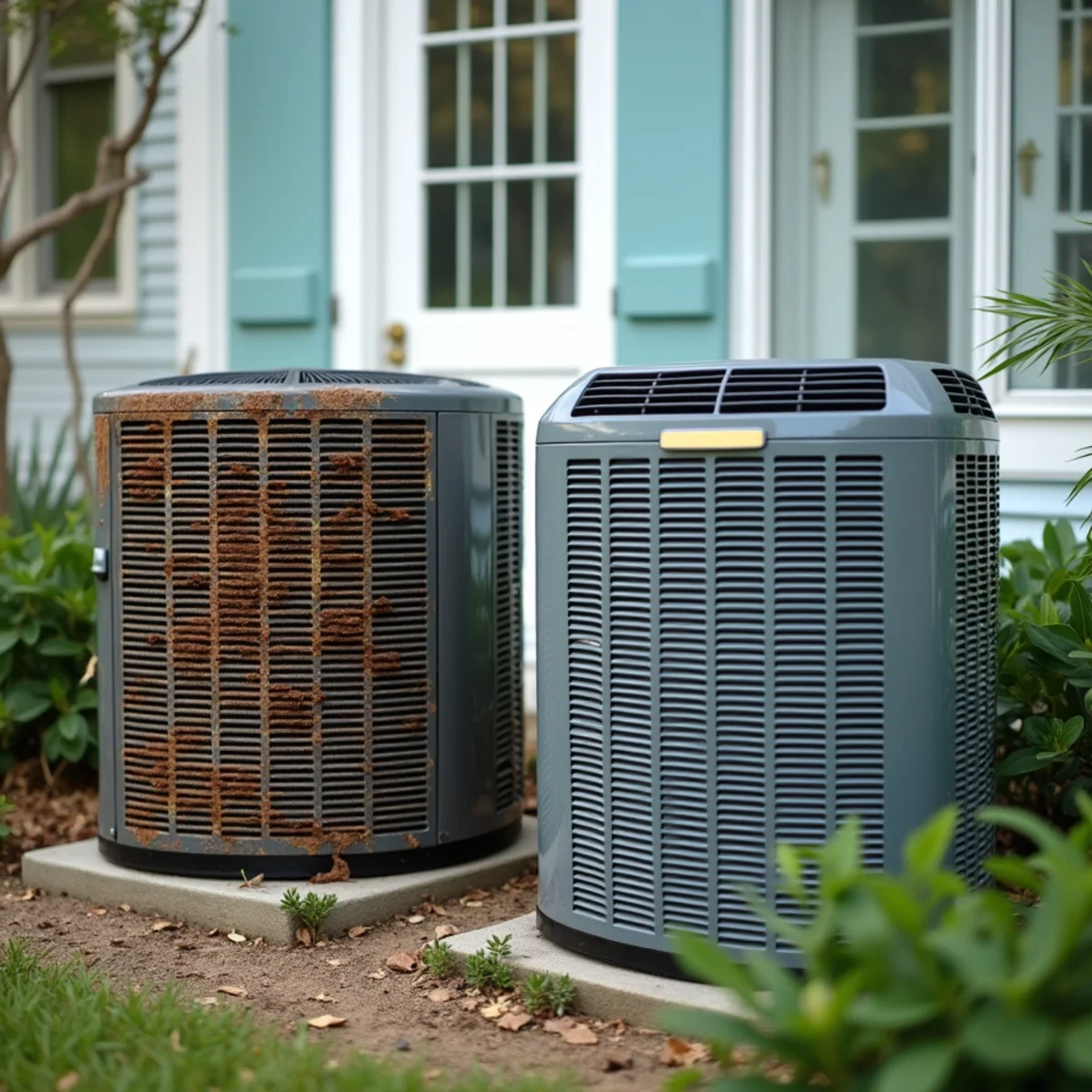
Ask a northern HVAC contractor how long an air conditioner lasts and you'll hear 15-20 years. Ask one on the Treasure Coast and the honest answer near the water is six to eight — unless the system is protected, in which case the northern answer comes back. The difference is salt, and the difference between dying young and living long is a protection stack that costs hundreds a year against replacements that cost thousands.
This guide covers why salt is so lethal, the four layers of defense, and the actual math of each — because waterfront homeowners deserve to see the comparison before the corrosion makes it for them.
The science: how salt eats a condenser
Salt air deposits chloride on outdoor coils, fins, cabinets, and electrical connections. Chloride is electrochemistry's accelerant: it breaks down the protective oxide layers on aluminum and copper, drives galvanic corrosion wherever dissimilar metals meet (fins on tubes, cabinets on frames), and concentrates as humidity cycles — wet, dry, wet — which our climate does relentlessly.
The visible progression: fins dull, then darken at the salt line, then flake. Capacity drops as the coil's surface degrades, the system runs longer to compensate, electrical components wear under the extended load, and eventually the coil or the compressor gives out. The unit doesn't fail suddenly; it dies in slow motion, and every season of protection slows the clock.
Layer one: coated coils and coastal-rated equipment
Factory epoxy-coated coils seal the metal against salt deposition — the single most effective defense, and the reason coastal-rated equipment is the only thing we quote within the salt path. For systems already installed with sound coils, field-applied coatings buy meaningful years. The cost delta on new equipment is modest — a few hundred dollars against a $6,000-$10,000 premature replacement.
What coatings don't do: resurrect a coil that's already crumbling. The assessment comes first — protect what's salvageable, replace what isn't. That honesty is why the inspection precedes every coating quote.
Layer two: the freshwater rinse habit
Salt does its damage by depositing and concentrating; a monthly or biweekly garden-hose rinse (power off, gentle spray, top-down) flushes the deposits before they etch. It costs nothing but five minutes and water, and it's the highest return-per-dollar defense on this list — the habit alone measurably extends coil life at waterfront addresses.
The technique has rules: power off at the disconnect, no pressure washers (they fold fins), and electrical compartments kept dry. We coach every waterfront customer through it, and maintenance plans build the reminders in. Free beats expensive, every time it works — and it works.
Layers three and four: surge protection and maintenance
Surge protection defends the electrical half of the corrosion story: salted connections and boards fail faster when every summer storm spikes them. A whole-system surge device is inexpensive against the compressor it protects — and in lightning-dense Martin County, it's insurance that pays out somewhere statistically soon.
Professional maintenance ties the stack together: quarterly filters, coil cleaning that doesn't damage fins, drain treatment, electrical testing under load, and the corrosion inspection that tracks the salt line's progress year over year. Plans run a few hundred dollars a year; the premature replacements they prevent run five figures. The math isn't close.
- Coated/coastal equipment: modest premium, multi-year payoff
- Field coating for sound existing coils
- Monthly freshwater rinses: free, coachable, effective
- Whole-system surge protection: cheap compressor insurance
- Maintenance plan: the stack's keystone, a few hundred a year
Frequently Asked Questions
Unprotected, expect 6–8 years within the salt path — versus 12–15 inland. With the full protection stack (coated coils, rinses, surge protection, maintenance), coastal equipment reaches the long end of the range. The protection is the difference, and the math favors it heavily.
Services Mentioned
Areas We Serve
Related Reading
Local Guides
Salt Air Destroys AC 4-8x Faster: A Stuart Homeowner's Guide
Living near the water costs your condenser years of life — unless you fight back. The corrosion science, the distance zones, and the protection that works.
Costs & Buying
AC Replacement Cost on the Treasure Coast: Salt-Air Rated vs Standard
Reported central AC installation near Stuart runs $5,800–$11,200 — and the salt-air question changes what you should buy. The honest breakdown.
Seasonal Care
Monthly Freshwater Coil Rinses: The Stuart Salt-Air Maintenance Habit
Five minutes and a garden hose: the rinse habit that flushes salt before it etches, and the closest thing coastal HVAC has to a free lunch. The technique, done right.