
Local Guides · 6 min read
Florida Is the Lightning Capital: Protecting Your AC on the Treasure Coast
By HVAC Stuart FL · Published June 20, 2025 · Updated July 30, 2025
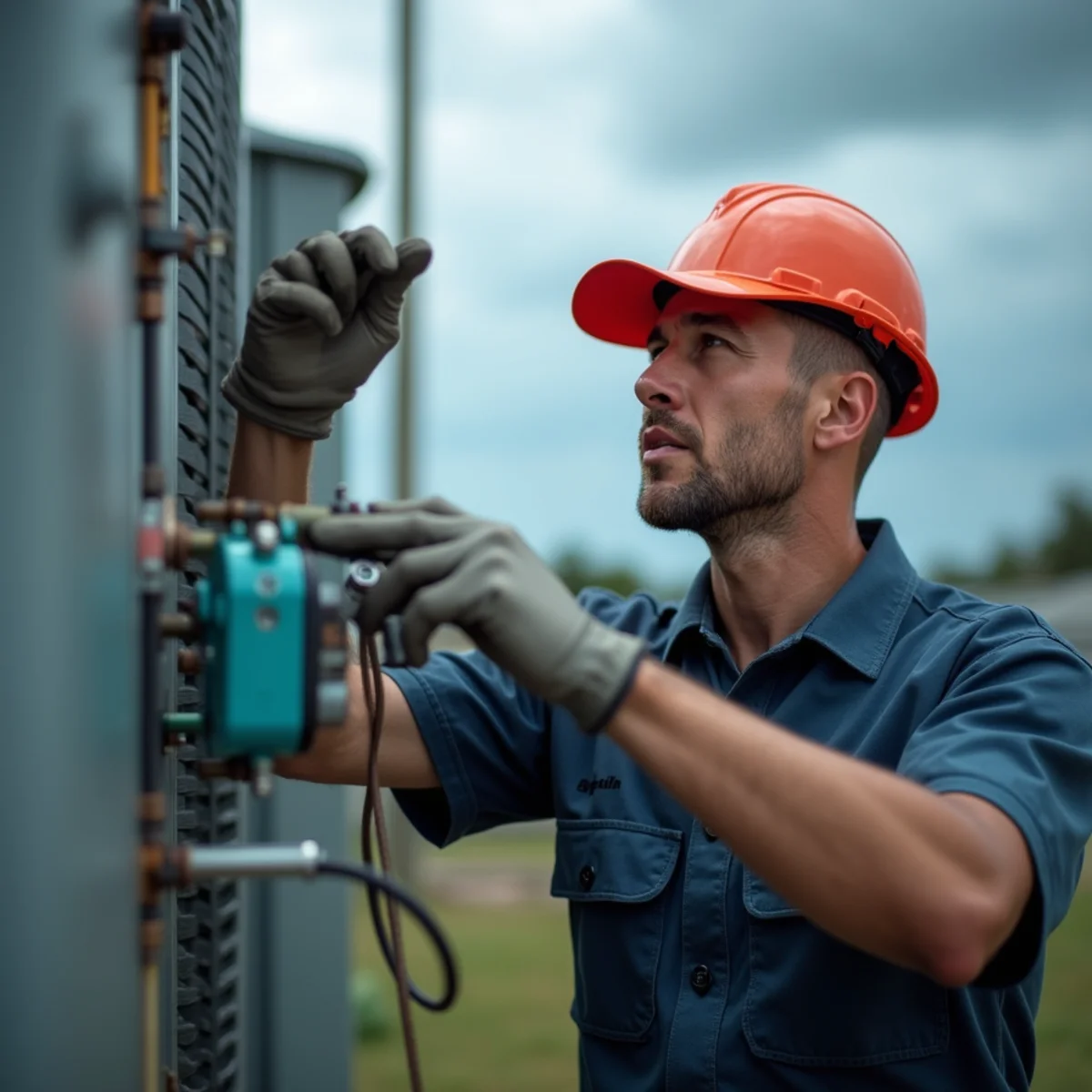
Florida wins a national title every year that nobody celebrates: lightning strike density. The Treasure Coast sits squarely in the red zone, and between June and September, every afternoon thunderstorm is a voltage event looking for things to damage — with the condenser in your yard, wired to your panel, standing tall in the selection pool.
The damage pattern is well documented and mostly preventable. This guide covers what lightning and its aftermath actually do to HVAC equipment, the protection that works, and the post-storm window when most of the casualties happen.
What lightning actually does to an AC
Direct strikes are the rare, dramatic case — and when they hit, the damage is usually total. The everyday threat is the induced surge: a strike within a mile induces voltage spikes in wiring, and the grid's own flickers and outages during the storm add their own events. The run capacitor — voltage-sensitive and already stressed by our climate — is the most common casualty. Control boards die next. Compressors are the expensive end.
The signature: equipment that dies in the same hours as the storm, often with other electronics affected in the house. The differential diagnosis matters (breakers, float switches, and coincidence all get blamed on lightning), but a metered diagnosis naming surge as the cause is also what an insurance claim needs.
The protection that works
Layer one: the whole-system surge protective device installed at the equipment — it clamps the spike before it reaches the compressor, ECM motor, and boards, and costs a small fraction of any component it protects. Panel-level protection layers above it; the two together are the standard in lightning country. A power strip downstream of the panel is not in this conversation — it can't defend components it sits downstream of.
Layer two is grounding: a surge protector on a compromised ground is decoration. We verify grounding and disconnect condition at installation. Layer three is habit: the stable-grid restart after outages (give the system a few minutes and a stable grid), and the pre-storm shutdown during the worst of it when you're home to do it.
- Whole-system surge device at the equipment (the core defense)
- Panel-level protection layered on top
- Grounding and disconnect verified at install
- Stable-grid restart after outages — the aftermath habit
- Post-storm metered diagnosis for insurance documentation
The aftermath window
Here's the pattern that surprises homeowners: most lightning-season compressor deaths happen after the storm, not during it. Grid restoration produces spikes, sags, and momentary interruptions for hours; each one stresses components the storm didn't touch. The lights coming on feels like the end; electrically, it's a second quieter storm.
The habits that survive it: shut the system off during outages, wait for stable power before restarting, and if anything seems off after restoration (humming without starting, tripping breakers, warm air), call before running it further. The documentation habit — photos of breaker states and equipment condition — pays off if the insurance conversation follows.
The math, once more
A surge device costs a small fraction of the capacitor, board, or compressor it defends — and on the Treasure Coast, the odds it earns its keep within a few seasons are excellent. Add the grounding verification, the restart habits, and the documented diagnosis when damage does occur, and lightning season becomes a weather event instead of a budget event.
Prevention here isn't paranoia; it's actuarial. Florida's title is earned every summer. The homes that protect against it keep their compressors; the homes that don't, fund ours. We'd rather sell you the device.
Frequently Asked Questions
Yes — Florida consistently leads the nation in lightning strike density, with the Treasure Coast in the highest-exposure zone. June through September afternoons are the peak window, and every storm is a voltage event for nearby equipment.
Services Mentioned
Areas We Serve
Related Reading
Storm & Emergency
Lightning Strike Fried Your AC? A Treasure Coast Surge Damage Guide
Florida is the lightning capital — and your condenser is the tallest metal object in the yard. What a strike or surge actually damages, and the $100 fix that prevents it.
Problems & Fixes
AC Blowing Warm Air After a Thunderstorm? Treasure Coast Troubleshooting
Every summer storm leaves a few ACs blowing warm behind it. The troubleshooting sequence — breaker, surge, float switch, charge — in the order that saves money.
Seasonal Care
Hurricane-Season HVAC Checklist: Straps, Covers & Surge Protectors
Hurricane season starts June 1 — and your condenser has homework. The pre-season checklist that Stuart homes have learned since Frances and Jeanne, done in one visit.