
Local Guides · 6 min read
Flood-Zone Rules for Outdoor AC Units in Stuart's Waterfront Neighborhoods
By HVAC Stuart FL · Published July 5, 2025 · Updated August 10, 2025
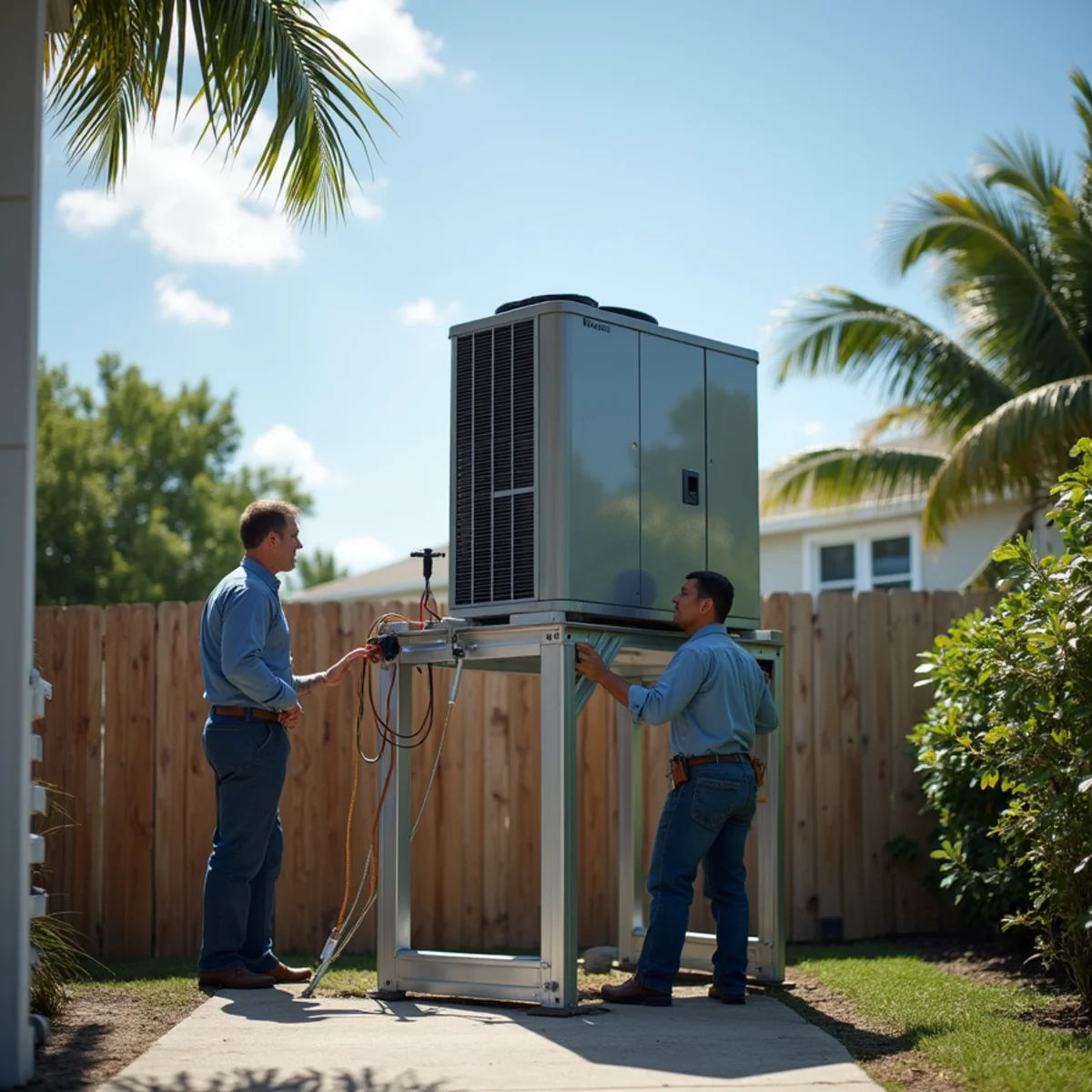
Stuart's most desirable addresses share a regulatory reality: the low parcels near the river, the canals, and the barrier island sit in designated flood zones, and replacement outdoor equipment pays a height requirement. The rules exist because 2004 taught the region what standing water does to a condenser's electrical compartment — and because insurance economics reward every foot of elevation.
If your replacement quote suddenly includes an 'engineered stand,' this guide explains what the rules require, how the elevation process actually works, and why the extra height is the cheapest storm insurance the code ever mandated.
The rules: what triggers elevation
Flood-zone designations (AE, VE, and their cousins on the FEMA maps) carry construction standards for equipment in flood-prone areas: outdoor mechanical equipment must be elevated above the base flood elevation (BFE) — the height floodwaters are statistically expected to reach — or protected by other code-recognized means. Martin County and the City of Stuart enforce these through the permitting process on replacement equipment, not just new construction.
The practical trigger: when a replacement condenser is permitted on a designated flood-zone parcel, the elevation requirement applies. Existing ground-level units that predate the rules get replaced into compliance — which is why waterfront replacements here often involve a stand that the original install never had.
The engineered stand, explained
Elevation hardware is not a stack of blocks: a proper installation uses an engineered stand — structurally rated for the equipment's weight, wind loads, and the lateral forces a flood delivers — anchored to code, with the platform height set above BFE (plus any freeboard the jurisdiction requires). The engineering may be prescriptive for standard equipment or stamped for unusual cases.
The stand changes more than height: line sets lengthen and get re-routed, electrical whip and disconnect heights rise, and the pad area gets drainage attention so the new elevation isn't undermined by the water it's avoiding. Done right, it's a one-visit scope bundled into the replacement; done wrong, it's a re-inspection and a do-over.
- Height set above base flood elevation (BFE) plus freeboard
- Structurally rated, wind- and flood-load engineered
- Anchored to code — strapping included
- Line sets, electrical, and drainage re-routed to match
- Permitted and documented — the record matters for insurance
The permitting and insurance payoff
The elevation work lives inside the AC replacement permit: Martin County requires a permit to install an air conditioner, the elevation compliance is part of the inspected scope, and the final record documents the whole package. That record matters twice — it satisfies the jurisdiction, and it's the evidence flood-insurance rating and future claims reward.
Insurance payoff runs in both directions: elevated equipment often improves flood-insurance rating factors, and when the next storm surge arrives, the elevated unit is the one that starts afterward instead of filing a claim. The 2004 cohort taught the region this lesson; the elevation rules are its codified form.
Who needs what: the neighborhood map
Rocky Point, South River, Lost River, and the canal-front streets carry the county's densest concentration of elevated-equipment parcels; the barrier island's surge zones apply it strictly; and Sewall's Point's low riverfront lots join the list. Interior streets well above the floodplain typically don't trigger the requirement — elevation there is a good-practice conversation, not a code mandate.
The honest process: we verify your parcel's designation during the estimate, quote the elevation scope (or its absence) explicitly, and handle the engineering, stand, permitting, and inspection as part of the replacement. You should never discover the height requirement on install day — it belongs in the quote, with the math.
Frequently Asked Questions
Parcels in designated flood zones (AE, VE, etc.) require replacement outdoor equipment elevated above base flood elevation, enforced through the permitting process. We verify your parcel's designation during the estimate and quote the elevation scope explicitly.
Services Mentioned
Areas We Serve
Related Reading
Costs & Buying
Does Florida Homeowners Insurance Cover Hurricane HVAC Damage?
Wind, surge, and flood treat your AC claim differently. What Florida homeowners insurance typically covers — and the documentation that separates approval from denial.
Storm & Emergency
Hurricane Hit Your AC? A Stuart Post-Storm HVAC Checklist
The storm has passed — now what? A step-by-step HVAC checklist for Stuart homeowners: what to touch, what to leave alone, and how to protect your insurance claim.
Seasonal Care
Hurricane-Season HVAC Checklist: Straps, Covers & Surge Protectors
Hurricane season starts June 1 — and your condenser has homework. The pre-season checklist that Stuart homes have learned since Frances and Jeanne, done in one visit.