
Costs & Buying · 7 min read
Does Florida Homeowners Insurance Cover Hurricane HVAC Damage?
By HVAC Stuart FL · Published June 1, 2025 · Updated August 12, 2025
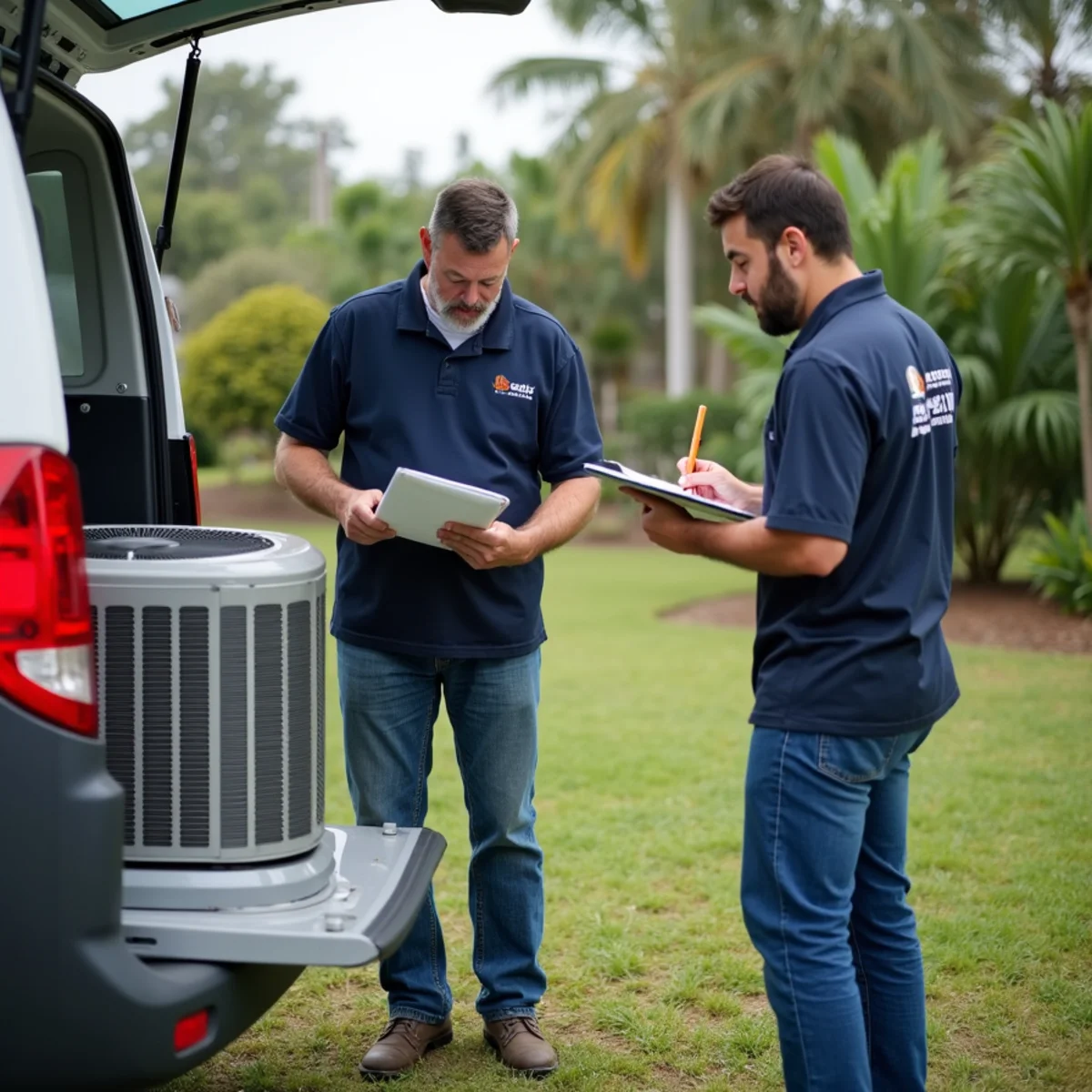
The hurricane took the fence, half the soffit, and — it turns out — the AC. Whether insurance replaces that condenser depends on three things your policy decided long before the storm: the cause of loss, your coverage type, and the documentation you can produce. Two of those three you can still influence after the fact, which is what this guide is for.
The honest caveat up front: nobody — including your contractor — can promise coverage. That call belongs to your policy and your adjuster. What a contractor can do is provide the technical documentation that lets the adjuster make the call quickly and correctly.
Cause of loss: the fork in the claim
Wind damage — a unit thrown from its pad, a coil punctured by debris, a line set torn loose — is typically covered under standard homeowners windstorm provisions, subject to your hurricane deductible. Surge damage from lightning or grid restoration is usually treated as sudden accidental loss and often covered. The claim's first question is always 'what caused it,' and the answer needs documentation, not just narrative.
Flood damage is the fork's other tine: surface water (storm surge, rising water) falls under flood insurance, which many homeowners don't carry — while wind-driven rain entering through storm-created openings may fall back under the homeowners policy. The boundary cases are exactly why the written inspection that separates causes matters: a unit affected by both wind impact and standing water needs its causes documented individually.
The documentation that wins
Claims succeed on paper: photographs taken before cleanup (water lines, debris impact, displaced equipment), preserved damaged parts, dated records of storm passage and power restoration, and a written inspection that distinguishes storm damage from pre-existing wear. That last item is the technical heart — an adjuster's hardest call is separating the corroded coil that was already failing from the surge-killed board that the storm caused.
The inspection should name causes specifically: 'wind-thrown unit with cracked line set and impact-damaged coil' reads differently than 'unit not working after storm.' We write them that way, itemize estimates to match, and answer the adjuster's technical questions directly. We never promise coverage — but we make sure the facts arrive organized.
- Photos before cleanup: all sides, water lines, nameplate, surroundings
- Preserved parts: keep damaged components for inspection
- Timeline: storm passage, power restoration, symptom onset
- Written inspection separating storm damage from wear
- Itemized estimate formatted for the claim
Deductibles, depreciation, and the math
Florida hurricane deductibles run as a percentage of dwelling coverage (commonly 2%), not a flat amount — a meaningful number that shapes whether a single-unit claim is worth filing. Policies also typically pay actual cash value (depreciated) unless you carry replacement-cost coverage — a twelve-year-old unit's depreciated value is a fraction of its replacement cost, which changes the math again.
Run the arithmetic before committing: estimated repair or replacement cost, your deductible, your coverage type, and the premium consequences of filing. Sometimes the claim makes sense immediately; sometimes the depreciation math says absorb the loss and replace on your own schedule. We provide the numbers you need for that calculation — the decision stays yours.
The rebuild: claiming forward
However the claim resolves, the replacement that follows should claim forward: elevated above flood levels where the parcel requires, strapped to current code, surge-protected against the next restoration spike, and coastal-rated against the salt the storm just redistributed. A replacement that reproduces the old vulnerability is a claim waiting to be filed twice.
We build that resilience package into every post-storm replacement, with the permits and documentation that prove it. The best outcome isn't just the check — it's the system that doesn't need the next claim.
Frequently Asked Questions
Often yes for wind and surge damage, subject to your policy, deductible, and the adjuster's findings. Flood-related damage typically requires separate flood coverage. Documentation tying the damage to its cause is what moves a claim from contested to approved.
Services Mentioned
Areas We Serve
Related Reading
Storm & Emergency
Hurricane Hit Your AC? A Stuart Post-Storm HVAC Checklist
The storm has passed — now what? A step-by-step HVAC checklist for Stuart homeowners: what to touch, what to leave alone, and how to protect your insurance claim.
Storm & Emergency
Post-Hurricane No-Cool Calls: Why Compressors Die After Stuart Storms
It's not the wind and rain that kill compressors — it's what happens in the hours after. The post-storm failure pattern Stuart technicians know by heart.
Local Guides
Flood-Zone Rules for Outdoor AC Units in Stuart's Waterfront Neighborhoods
Waterfront Stuart parcels carry elevation requirements for replacement condensers. The rules, the engineered stand, and the permitting — explained by the crew that does it weekly.