
Problems & Fixes · 6 min read
Corroded Condenser Coils: Stuart's Salt-Air Problem Explained
By HVAC Stuart FL · Published May 25, 2025 · Updated July 18, 2025
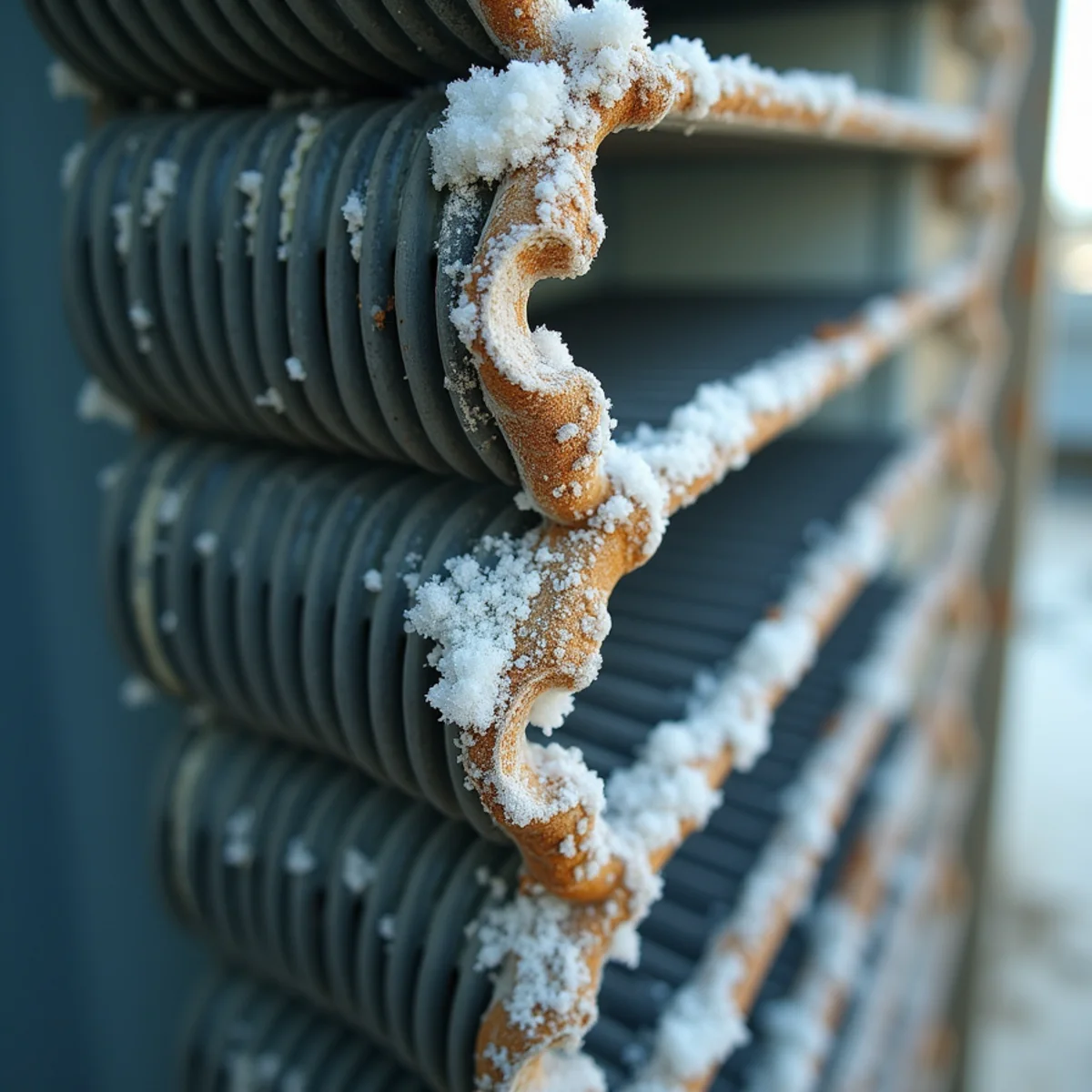
Every coastal Stuart technician can diagnose coil corrosion from ten feet away: fins that dulled two summers ago, darkened last summer, and are flaking now. The salt air that makes riverfront living worth the premium is the same air eating the condenser in the side yard — four to eight times faster than inland, whether the system is premium or builder-grade.
This guide walks the corrosion stages, the assessment that decides what's saveable, and the interventions that work at each stage — because 'it's corroded' isn't a diagnosis; it's a starting point.
The four stages of salt-air corrosion
Stage one is deposition: salt settles on fins and tubes, invisible unless you're looking, and the rinse habit at this stage is worth years. Stage two is dulling and pitting — the oxide layers break down, aluminum loses its sheen, and pinprick corrosion starts at the weakest points. Stage three is the visible dark line: corrosion advancing along the airflow path where salt concentrates, fins darkening and beginning to flake at the edges.
Stage four is structural: fins crumbling between your fingers, green corrosion at tube joints, capacity measurably down, and the system running longer to deliver less. Each stage backwards is recoverable with more intervention; stage four is replacement territory. The assessment's job is placing your coil on that timeline honestly.
What's saveable — and what isn't
Surface corrosion with intact fins and no refrigerant leaks is protectable: a professional cleaning (the kind that doesn't fold fins), a field-applied protective coating, and a rinse program can add years. The coating seals the metal against further deposition and buys the timeline back substantially.
The unsalvageable signs: fins that crumble on contact, green or white corrosion blooming at tube joints, oil residue indicating a refrigerant leak through the corrosion, or capacity loss the cleaning doesn't restore. At that point the coil — sometimes the system, if the air handler is the same vintage — is in replacement conversation. We put the repair-versus-replace numbers in writing rather than guessing either direction.
- Saveable: intact fins, surface corrosion, no leaks — clean, coat, rinse
- Borderline: flaking edges, early capacity loss — assess carefully
- Gone: crumbling fins, joint corrosion, leaks — replacement conversation
The prevention that beats the timeline
Coated coils change the game before corrosion starts: factory epoxy coatings seal the metal and are the reason coastal-rated equipment is our standard specification within the salt path. For installed systems with sound coils, field-applied coatings add years at a fraction of replacement.
The rinse habit handles the deposition stage that coatings can't fully prevent: monthly freshwater rinses (power off, gentle spray) flush the salt before it concentrates. Combine with annual corrosion inspection — tracking the salt line's progress year over year — and the six-to-eight-year death sentence becomes a twelve-to-fifteen-year service life. The stack works; the records prove it.
What corrosion costs if you ignore it
A corroding coil doesn't fail politely — it drags the whole system with it. Capacity loss extends runtimes, runtimes wear capacitors and contactors, electrical components fail in sequence, and the compressor works against a coil that can't reject heat until it joins the casualty list. The end-stage repair bill is usually the replacement that prevention would have scheduled on your calendar years earlier.
The math is the sales pitch: a few hundred dollars a year of stack (maintenance, rinses, coating where applicable) against a five-figure early replacement. On the Treasure Coast, that's not an upsell — it's the operating manual.
Frequently Asked Questions
Look for the progression: fins that have lost their sheen, a darkened band along the airflow side, flaking at fin edges, and capacity that's quietly dropped. By the time the house feels it, the coil is well into stage three — earlier is better, and a corrosion inspection places it on the timeline.
Services Mentioned
Areas We Serve
Related Reading
Costs & Buying
Why Coastal AC Units Die in 6-8 Years — and What Protection Costs
A condenser that would last 15 years inland dies in 6-8 near the water. The corrosion science, the four-layer defense, and the math that makes each layer pay.
Local Guides
Salt Air Destroys AC 4-8x Faster: A Stuart Homeowner's Guide
Living near the water costs your condenser years of life — unless you fight back. The corrosion science, the distance zones, and the protection that works.
Seasonal Care
Monthly Freshwater Coil Rinses: The Stuart Salt-Air Maintenance Habit
Five minutes and a garden hose: the rinse habit that flushes salt before it etches, and the closest thing coastal HVAC has to a free lunch. The technique, done right.