
Storm & Emergency · 6 min read
Lightning Strike Fried Your AC? A Treasure Coast Surge Damage Guide
By HVAC Stuart FL · Published June 22, 2025 · Updated July 15, 2025
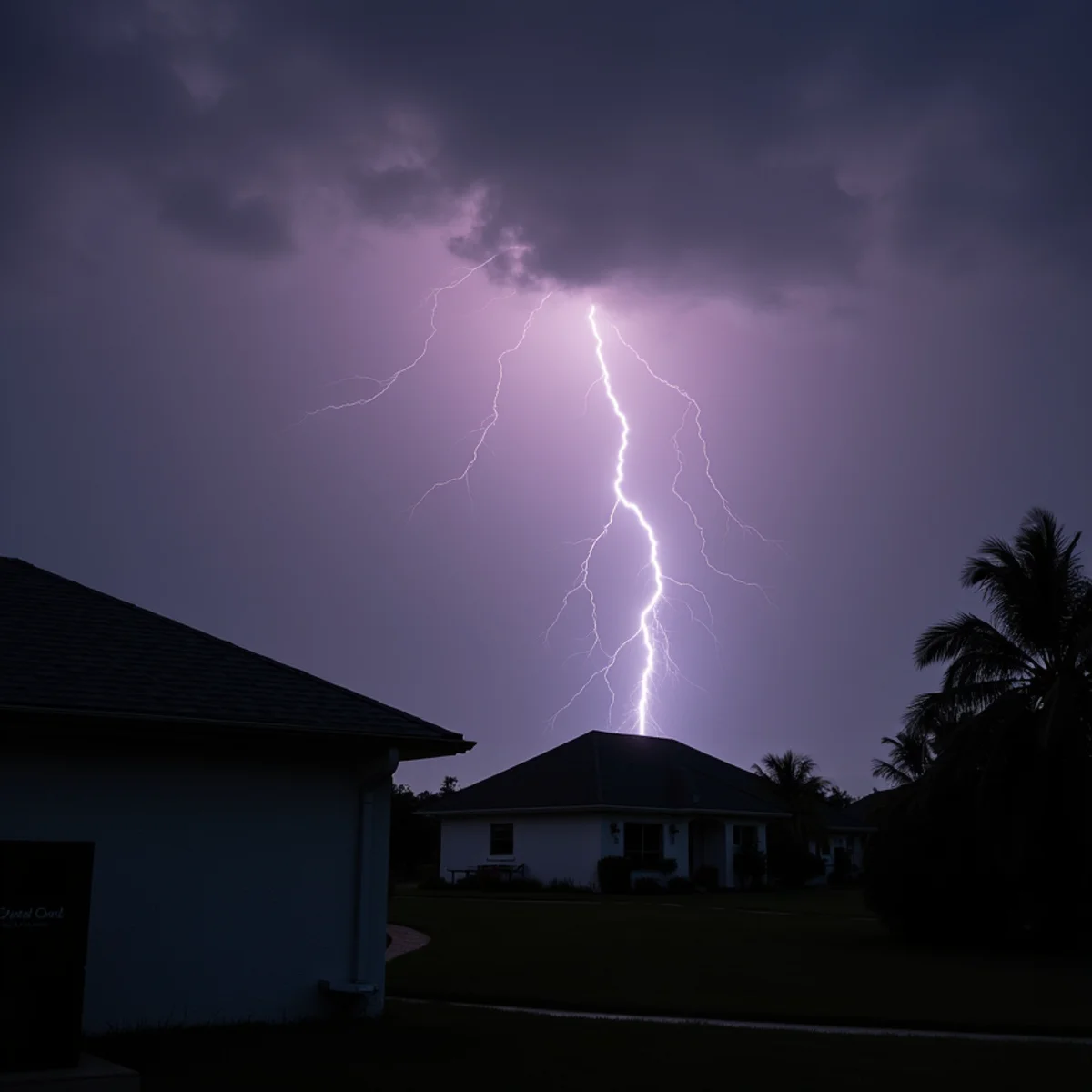
Florida leads the nation in lightning density, and the Treasure Coast sits in the red zone — every summer afternoon is a lottery where the condenser in your yard is the tallest metal object for fifty feet. Most 'lightning damage' isn't a direct strike; it's the induced surge from a strike nearby, or the grid flicker and restoration spike that follows a storm. The compressor, the control board, and the capacitor take the hit.
This guide covers what surge damage actually looks like, what it costs, what insurance typically asks, and — the part worth reading twice — the modest protection that prevents most of it.
What a surge actually damages
The run capacitor is the most common casualty — it's a voltage-sensitive component already working hard in our climate, and a spike pushes it over. Control boards come next: modern equipment runs on sensitive electronics that die from surges direct strikes don't even need. The compressor itself is the expensive end of the spectrum — a strong surge can damage its windings, and at that point you're pricing a compressor replacement against a system replacement.
The signature of surge damage is the cluster: the AC dies in the same hours as a thunderstorm, often alongside other electronics in the house. If the outdoor unit hums, clicks, or trips the breaker right after a storm passes, surge is the leading suspect until testing says otherwise.
Diagnosis: separating surge damage from coincidence
Post-storm no-cooling has other suspects too — a tripped breaker or disconnect from the momentary outage, a condensate float switch that tripped, or simple thermostat confusion. The diagnosis sequence rules those out first: power at the disconnect, breaker state, thermostat call, then the components. Metered testing of the capacitor, contactor, and board tells the story in minutes.
For insurance purposes, documentation matters: the timing (storm, outage, failure), the failed components with photos, and the written diagnosis. Surge damage claims live or die on that paper trail — equipment that died 'sometime after the storm' reads very differently than equipment that failed within hours of a documented outage.
The prevention math
A whole-system surge protective device installed at the equipment costs a small fraction of the compressor or board it protects — and unlike a power strip downstream of the panel, it clamps the spike before it reaches the components that matter. Given Florida's strike density and the restoration spikes that follow every outage, it's the highest-value accessory in HVAC.
Grounding and disconnect condition complete the picture: a surge protector on a compromised ground is a talisman. We verify both when we install, and pair the device with the rest of storm prep — strapping, drainage, and a post-storm restart procedure that protects the compressor from the outage's dirty seconds.
- Whole-system surge protective device at the equipment
- Grounding and disconnect verification
- Post-outage restart procedure (wait, then start)
- Pre-storm documentation of equipment condition
Insurance and the aftermath
Surge damage from lightning is typically treated as a sudden, accidental loss — often covered, subject to your policy's terms and deductible. The claim's strength depends on the documentation: timing evidence, failed-component photos, and a written diagnosis that names the surge as the cause rather than guessing at it.
If the damage is severe — compressor plus board on an aging system — the replacement-versus-repair decision arrives quickly. We put both numbers in writing and provide the insurance-ready scope either way. And every replacement we do after a surge gets the device that prevents the next one, because once is a fluke; twice is a pattern.
Frequently Asked Questions
Yes — either through a direct strike or, far more commonly, an induced surge from a strike nearby or from grid restoration after an outage. Compressor windings are vulnerable to voltage spikes, and compressor replacement is the most expensive repair in residential HVAC.
Services Mentioned
Areas We Serve
Related Reading
Local Guides
Florida Is the Lightning Capital: Protecting Your AC on the Treasure Coast
Florida's lightning density is the nation's highest, and your condenser is the tallest metal in the yard. The protection that actually works — and the hours after the storm that matter most.
Problems & Fixes
AC Blowing Warm Air After a Thunderstorm? Treasure Coast Troubleshooting
Every summer storm leaves a few ACs blowing warm behind it. The troubleshooting sequence — breaker, surge, float switch, charge — in the order that saves money.
Seasonal Care
Hurricane-Season HVAC Checklist: Straps, Covers & Surge Protectors
Hurricane season starts June 1 — and your condenser has homework. The pre-season checklist that Stuart homes have learned since Frances and Jeanne, done in one visit.