
Commercial · 6 min read
Medical-Office HVAC: Serving Cleveland Clinic Martin Health Area Businesses
By HVAC Stuart FL · Published February 28, 2025 · Updated July 5, 2025
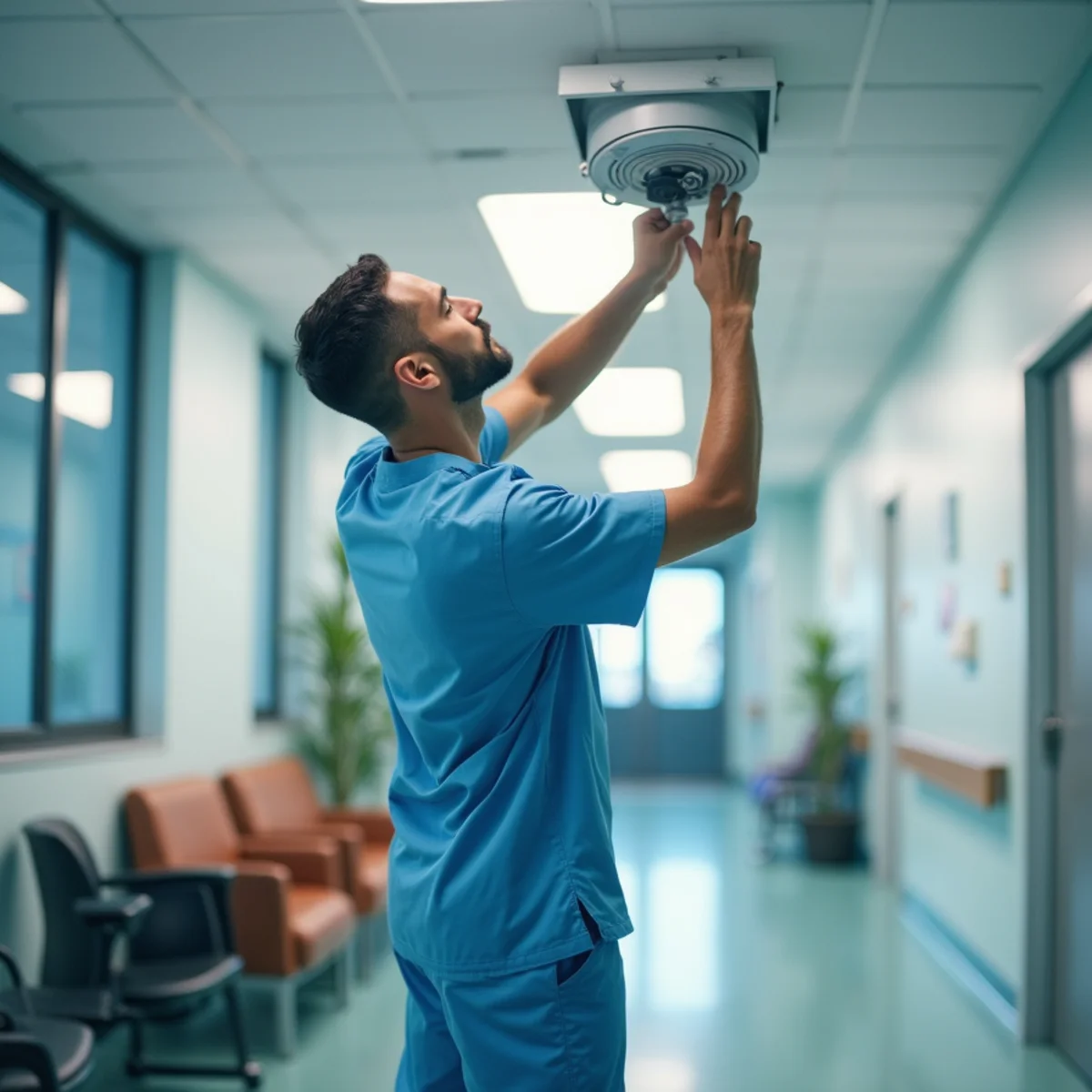
The medical corridor around Cleveland Clinic Martin Health runs on a different HVAC clock than retail or office space: when a suite's system fails, patients get rescheduled, procedures move, and the practice's revenue and reputation take the hit in the same afternoon. Healthcare-adjacent space — medical offices, dental suites, imaging centers, therapy clinics — needs HVAC service built around uptime, filtration, and response commitments that consumer-grade agreements don't contemplate.
This guide covers what medical-space HVAC actually requires: the critical-space documentation, the filtration and air-quality standards, the maintenance cadence, and the response terms that keep a practice's calendar intact.
The critical-space documentation
Every medical suite has spaces that can't tolerate downtime — exam rooms in use, sterilization areas with temperature and humidity tolerances, imaging equipment with its own environmental specs — and equipment whose failure mode matters (a chiller serving a suite is different from a unit serving a storage room). The first service visit documents all of it: equipment inventory, critical spaces, shutdown constraints, access paths, and the after-hours contact chain.
That documentation is what turns a 2 p.m. failure into a prioritized response instead of a discovery process. It's also what the practice's own compliance conversations sometimes ask for — environmental controls documented, maintenance records current — and the file exists for both purposes.
Filtration and air quality: the healthcare floor
Medical space raises the filtration bar: higher-MERV media where the system supports it, coil and drain hygiene that keeps biology out of the airstream, humidity control within the ranges clinical comfort requires, and — in suites with specific requirements — pressure relationships and dedicated filtration scoped to the use. The maintenance cadence follows: filters on a schedule that reflects clinical load, not office defaults.
The honesty clause: we serve the HVAC and the air-handling systems; we're not an infection-control consultant, and suites with specific clinical air requirements work within their facilities' standards. What we bring to that conversation is documentation — what's installed, what's maintained, and the readings that prove the system is doing what it's specified to do.
- Higher-MERV media where the system supports it
- Coil and drain hygiene on a clinical cadence
- Humidity control within clinical comfort ranges
- Pressure relationships and dedicated filtration scoped to use
- Documented readings supporting the practice's records
The maintenance cadence and the response terms
Medical-space maintenance runs tighter than office defaults: more frequent visits during the cooling season's peak, electrical and refrigerant testing that catches degrading components before they fail during clinic hours, and the asset documentation that plans replacements on the practice's calendar instead of the equipment's.
The response terms are the contract's heart: committed response times for critical-space failures, after-hours terms that match a practice's real schedule (which includes early mornings and the occasional Saturday clinic), and the escalation path when a failure threatens same-day operations. A medical suite's agreement should read like it was written for one — because the standard consumer agreement fails exactly when healthcare needs it most.
The corridor's reality: doing this at local speed
The Martin Health corridor's practices have options: national facility-services contracts that dispatch from Tampa, or a local contractor whose shop is twenty minutes from the suite and whose response commitment is enforceable because the trucks are actually nearby. For the single-suite practice and the small group, local speed usually wins — with the contract terms that make it structural rather than hopeful.
The program we build for medical clients carries the same discipline as every commercial agreement — defined visits, documented findings, committed response — with the healthcare layer on top: the critical-space file, the clinical cadence, and the understanding that a rescheduled afternoon of patients is the real cost of every failure we're paid to prevent.
Frequently Asked Questions
Critical-space documentation (which rooms can't tolerate downtime, equipment failure modes, after-hours contacts), tighter maintenance cadence during cooling season, filtration and humidity management at clinical standards where the system supports them, and committed response times in the agreement.
Services Mentioned
Areas We Serve
Related Reading
Commercial
Commercial HVAC for Downtown Stuart's Historic Riverfront Businesses
A 1920s building, a full dining room, and 88°F outside: downtown Stuart's commercial HVAC challenge. The old-building problems and the reliability answers.
Commercial
HOA & Condo HVAC Programs for Martin County Communities
Boards, managers, and 200 HVAC systems: why community-wide programs beat unit-by-unit scrambling, and what a good program includes.
Commercial
Property Manager's Guide: AC Turnovers in Stuart's Snowbird Rentals
Between-tenant windows are when rental AC problems hide. The turnover checklist, the maintenance calendar, and the emergency protocol that protects reviews.