
Commercial · 6 min read
Commercial HVAC for Downtown Stuart's Historic Riverfront Businesses
By HVAC Stuart FL · Published March 10, 2025 · Updated July 15, 2025
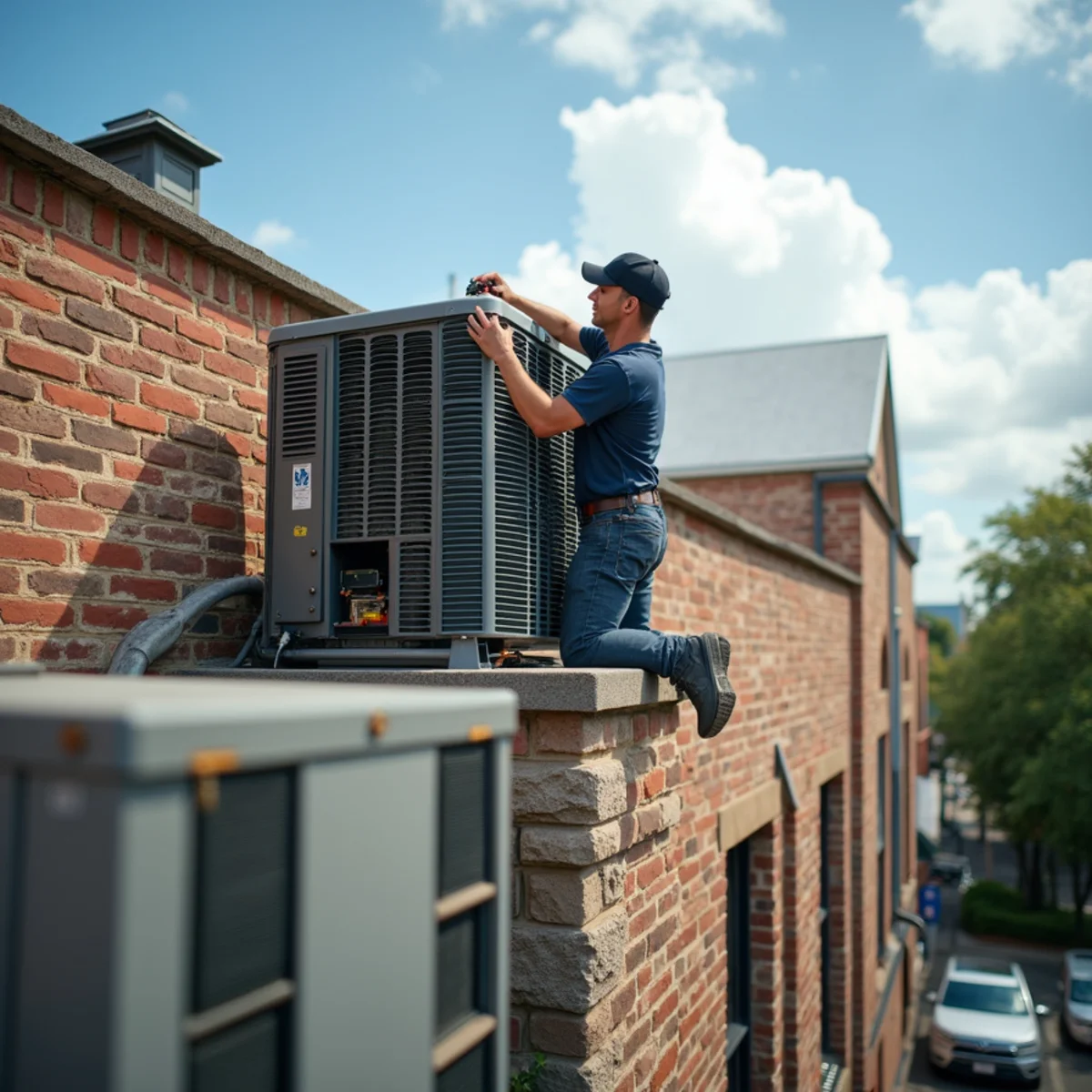
Downtown Stuart's riverfront commercial district runs on buildings that predate central air by half a century — 1920s masonry blocks along Osceola and Flagler, flat roofs, shared walls, and window openings where HVAC ducts were never meant to go. Running a restaurant or shop in one means solving comfort inside constraints the equipment catalog doesn't acknowledge.
This guide covers the historic-building HVAC playbook: what the buildings allow, what the systems cost to run well, and the maintenance discipline that keeps a dining room at 74°F through a packed Friday service.
The old-building constraint set
Historic masonry buildings constrain everything: no space for duct chases without eating rentable square footage, flat roofs that host equipment the wind and salt test constantly, shared walls that transfer loads between tenants, and facades the district's character (and sometimes its rules) protects from visible equipment. The solutions are creative: high-velocity and ductless systems where ducts can't go, rooftop units where the roof can take them, and zone designs that respect the building's structure instead of fighting it.
The load profile is its own puzzle: masonry holds heat, kitchens inject it, front-of-house glazing adds solar gain, and the historic windows (or their modern replacements) change the envelope's behavior. A load calculation that treats a 1920s building like a 2010s strip suite gets every answer wrong.
The restaurant equation
Restaurant HVAC is a balancing act before it's a comfort problem: kitchen exhaust pulls thousands of cubic feet of conditioned air out through the hood, make-up air has to replace it or the building goes negative (doors that won't close, grease migrating where it shouldn't), and the dining room's comfort depends on the exhaust and make-up systems staying in balance. When diners complain it's drafty, or the front door fights them, the balance is off — not the thermostat.
The maintenance rhythm follows the kitchen: hood-cleaning schedules affect exhaust performance, grease loads filter regimes, and the after-hours recovery (kitchens generate heat long after service ends) needs programming that matches the operation. We document the criticals — which spaces can't tolerate downtime, where the equipment is, who holds roof access — before the first emergency, not after it.
- Exhaust/make-up balance checked with every service
- Hood-cleaning coordination built into the HVAC schedule
- After-hours recovery programmed to the operation
- Critical-space documentation on file before emergencies
- Roof equipment: salt corrosion and tie-downs verified
Retail and office: the quieter problems
Retail and office space in the district runs simpler equipment with subtler failure modes: rooftop package units aging in the salt and sun, zone imbalances that make the corner office the complaint generator, and thermostats adjusted by whoever feels strongly that day. The inventory documentation matters more than the drama — unit age, refrigerant type, and condition recorded — because replacement planning at scale is the difference between a budgeted project and a June surprise.
The salt variable applies downtown too: the river's two blocks inland still deliver corrosion weather, and rooftop coils age faster than their spec sheets promise. Coated coils and rinse programs earn their keep on commercial roofs the same as residential yards.
The reliability plan: why contracts beat calls
A downtown business's HVAC relationship should be contractual, not transactional: defined visit frequency by equipment type, specific test lists, documented findings, response-time commitments for failures, and after-hours terms in writing. The contract is what turns a Friday-night failure from an open-ended scramble into a response with a number attached.
For the district's event economy — festivals, art walks, wedding season — the contract includes the pre-event checkups that catch the weak capacitor before the packed house discovers it. The worst time to meet your HVAC contractor is the hour before your biggest night; the best relationship is the one that never lets that meeting happen.
Frequently Asked Questions
Yes — high-velocity and ductless systems condition historic masonry where conventional ducts can't go, and rooftop units handle the loads where the roof allows. The design respects the building's structure and the district's character rather than fighting either.
Services Mentioned
Areas We Serve
Related Reading
Commercial
Medical-Office HVAC: Serving Cleveland Clinic Martin Health Area Businesses
A medical suite's HVAC failure isn't an inconvenience — it's rescheduled patients. The uptime, filtration, and response standards healthcare space demands.
Commercial
Property Manager's Guide: AC Turnovers in Stuart's Snowbird Rentals
Between-tenant windows are when rental AC problems hide. The turnover checklist, the maintenance calendar, and the emergency protocol that protects reviews.
Problems & Fixes
Is a Mini-Split Right for Your Stuart Garage or Addition?
Garages bake, additions roast, and window units fight a losing war. The mini-split case for Stuart's unconditioned spaces — sizing, cost, and the honest limits.